
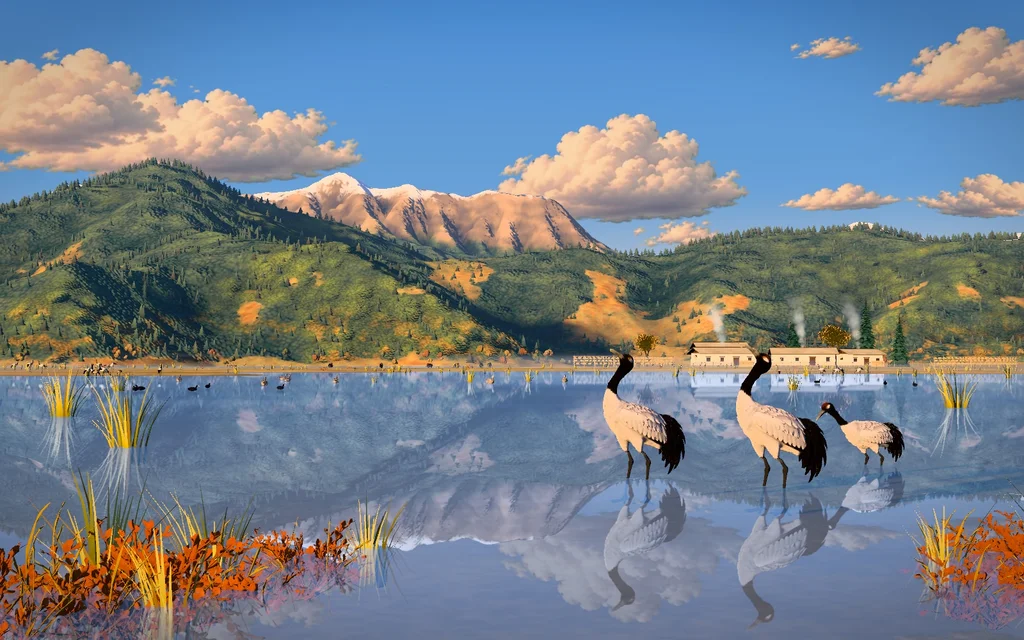
China · Yunnan · Napahai, Shangri-LaCranes on the Plateau
Every autumn, black-necked cranes fly in from the heart of the Tibetan Plateau to winter by this seasonal lake.
What you’ll hear
- Crane calls
- Lake wind
- Cowbells
In the 3D scene you can change the time, season and weather, or follow the local time.
About this place
Napahai lies about 7 km northwest of Shangri-La’s old town, a plateau lake that rises and falls with the seasons, its surface about 3,266 m above sea level. Summer rain floods the meadows into a lake that is fullest in autumn, with snow peaks mirrored in it. In the second half of November most of the water drains away within two or three weeks, leaving pale golden grassland.
Each autumn, black-necked cranes arrive from their breeding grounds deeper in the Tibetan Plateau. By day they feed in the fields and meadows; at dusk they return to shallow marshes far from the villages. Bar-headed geese winter here too and coots are common on the water, while yaks graze the meadows below the villages on the east shore.
Through the year
Approximate, from published sources; not monthly measurements.
Month by month
- JanuaryLow water, most cranes
- FebruaryLow water, ice on cold mornings
- MarchCranes begin to fly north
- AprilMost cranes have left
- MayMeadows green, rhododendrons bloom
- JuneRains begin, the water rises
- JulyMeadows flood; a few cranes summer
- AugustThe lake rises; yaks and cattle graze
- SeptemberLake at its fullest; barley harvest
- OctoberThe first cranes arrive
- NovemberMost of the lake drains away
- DecemberOnly a few square kilometres of water
Four seasons
Early November · Cranes arrive
The lake is full, the grass is gold, and the first cranes wade in the shallows.
Late November · The lake drains
Most of the lake vanishes in a few weeks; cranes feed on the newly exposed meadow.
February · Low water
The coldest time of year: only a few square kilometres of water, and the cranes are still here.
August · Summer flood
The rains turn the meadows into a lake; yaks graze the shore and the barley is green.
Best moments
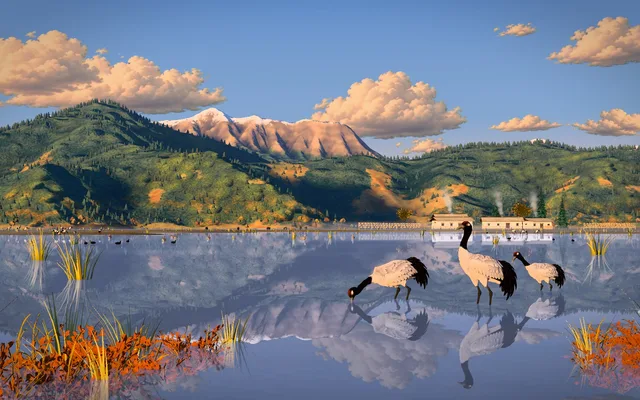
Cranes at sunrise
Nov 6 · 08:00 · Clear
Early November at sunrise: the peaks glow red, newly arrived cranes feed in the shallows, and a flock calls in the distance.
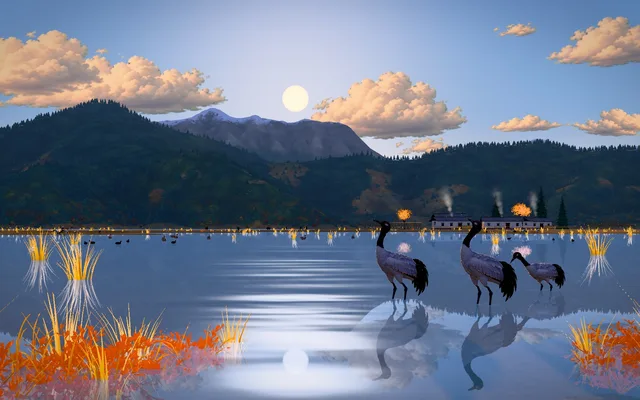
Into the evening light
Nov 6 · 17:45 · Clear
The evening sun sinks straight ahead, laying a path of light on the water with cranes in silhouette.
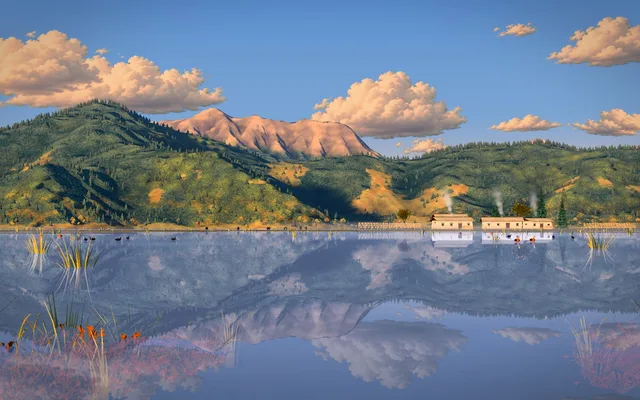
Full lake at dawn
Oct 10 · 07:45 · Clear
In October the lake is at its fullest, mirroring the peaks and dawn clouds; coots and ruddy shelducks dot the water.
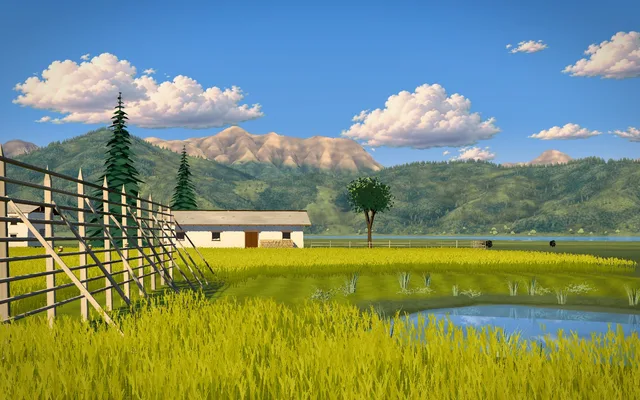
Green barley
Aug 15 · 09:20 · Clear · East shore fields
High summer by the east-shore fields: the barley is green, the drying racks stand empty, and the meadows beyond have become a lake.
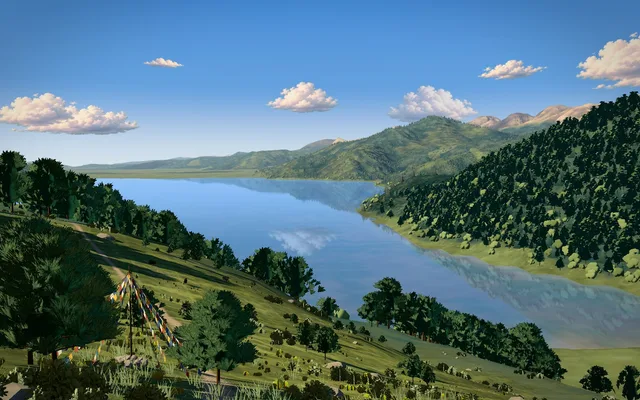
Summer panorama
Aug 15 · 09:20 · Clear · Overlook
From the overlook, the rainy-season lake fills the whole basin, with wind in the pines close at hand.
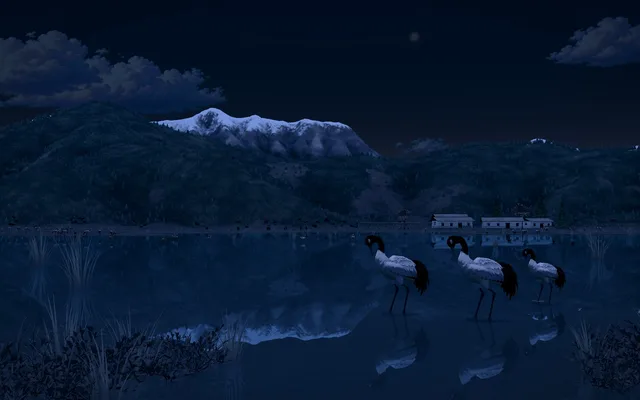
Cranes by moonlight
Nov 25 · 01:00 · Clear
Deep night after the lake has drained: a full moon on the peaks and shallows, cranes roosting in the water, hardly a sound.
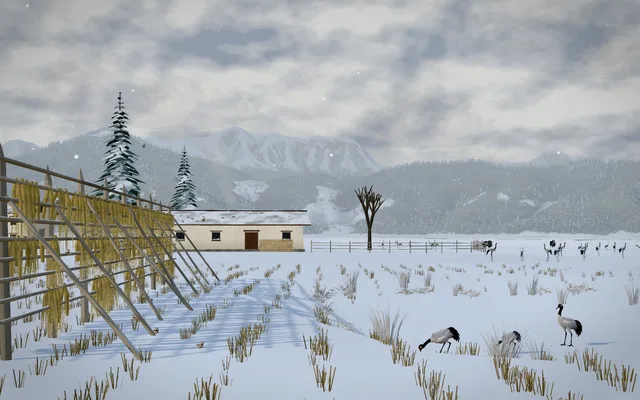
Snow on the barley racks
Feb 10 · 10:35 · Snow · East shore fields
A snowy day in February: the barley racks and houses are white, and wintering cranes forage in the snow.
Built from real terrain and photographs, with artistic license.
In the 3D scene you can change the time, season and weather, or follow the local time.
Enter sceneMore to explore
See all places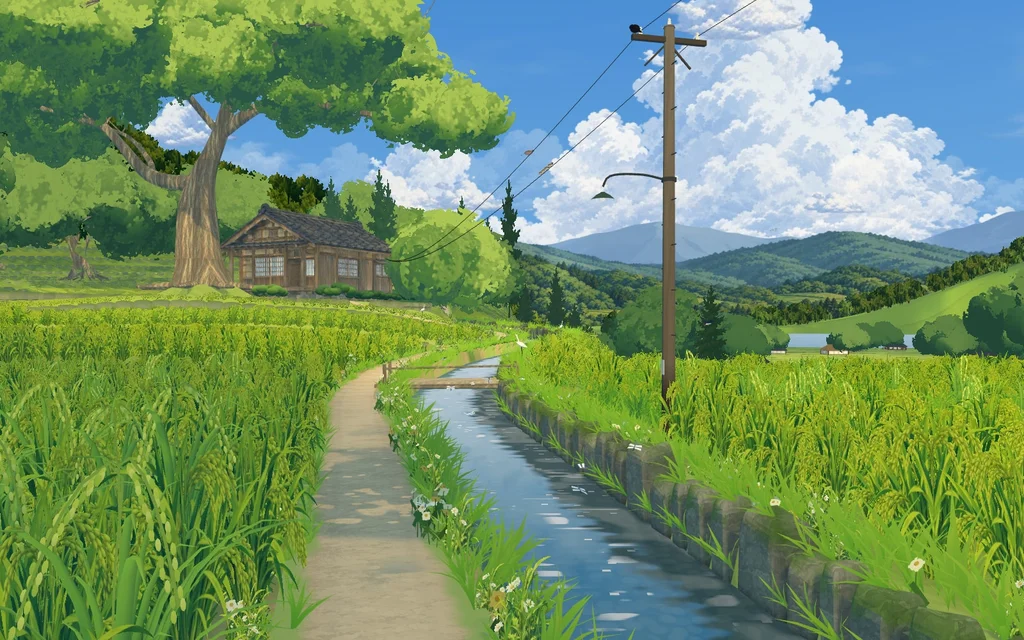
Summer Fields
Japan · Sayama Hills
Rest in the shade as a stream flows through summer.
130 mStreamField breezeCicadas
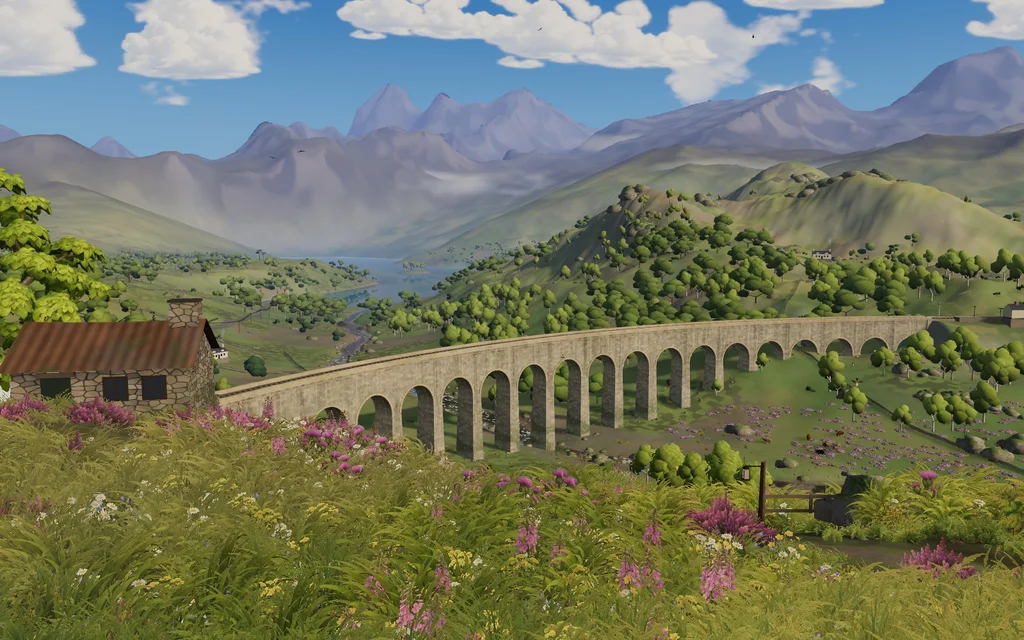
Highland Railway
Scotland · Glenfinnan
A train crosses the viaduct above wind-swept heather.
60 mHighland breezeStreamTrain
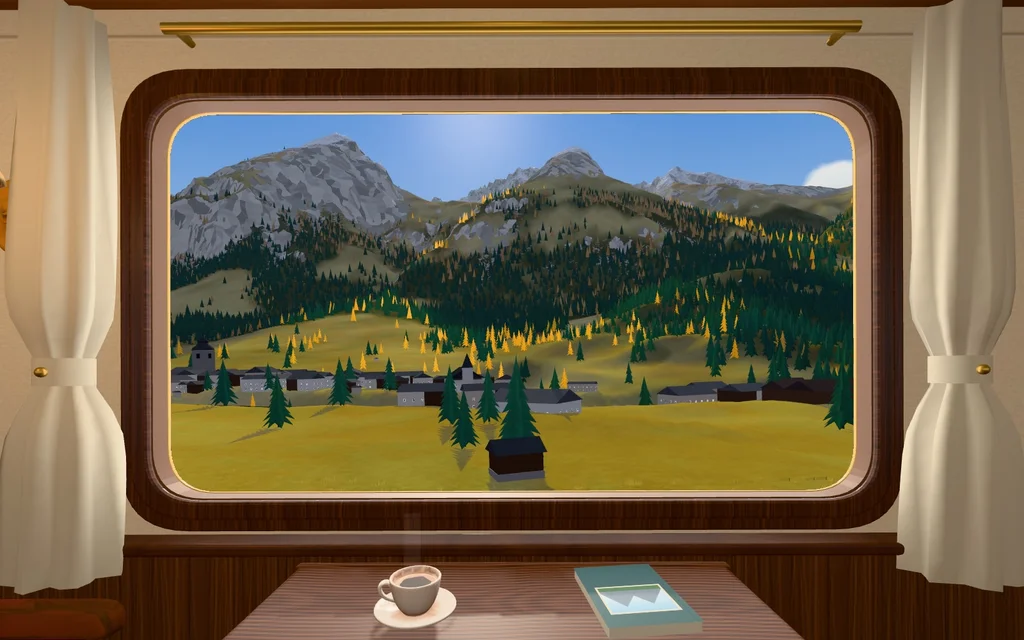
Valley Train Window
Switzerland · Albula Railway
Sit by the window as the train spirals up the valley.
1,372–1,789 mRail rhythmRiver outsideCowbells