
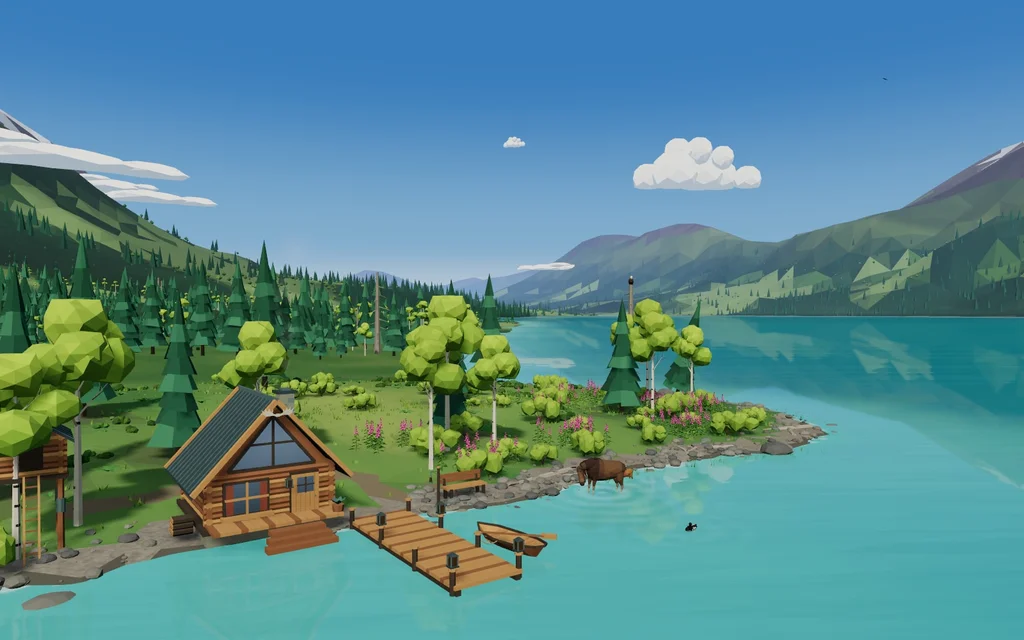
USA · Alaska · Kenai LakeCabin on Kenai Lake
Glacial rock flour turns the lake turquoise, and a moose leads her calf through the shallows past the cabin.
What you’ll hear
- Lake
- Wind in spruce
- Loon
In the 3D scene you can change the time, season and weather, or follow the local time.
About this place
Kenai Lake lies among the mountains of Alaska’s Kenai Peninsula, a zigzag glacial lake about 35 km long, its surface about 133 m above sea level. The Kenai River flows out of its western end. The Snow and Trail rivers carry in fine glacial rock flour that tints the water turquoise. Deep and slow to lose its heat, it is among the last lakes here to freeze, and in mild winters it never freezes over. At midsummer the day lasts about 19 hours and the night never gets fully dark.
Moose cows calve from mid-May to early June and spend summer feeding in the shallows with their young; the rut peaks from late September into early October, when bulls with broad palmate antlers appear. The grey snags along the shore are spruce killed by bark beetles, and bald eagles like to perch on them. Fireweed flowers in July; when the bloom reaches the top of the spike and goes to cotton, Alaskans say summer is nearly over. Then the first snow dusts the summits, and the birches turn fully gold in mid to late September.
Through the year
Daylight is calculated from the latitude; the sockeye row is a rough guide from published sources.
Month by month
- JanuaryAbout 7 hours of daylight; ice along the shore
- FebruaryAurora possible on clear dark nights
- MarchDay and night even out around the equinox
- AprilThe lake ice softens and starts to break up
- MayMoose calve; loons return by month’s end
- June~19 hours of daylight; the early sockeye arrive
- JulyFireweed in bloom; the late sockeye run begins
- AugustSockeye spawn in the creeks; fireweed tops out
- SeptemberFirst snow on the peaks; birches peak late month
- OctoberMoose rut; loons leave for the coast
- NovemberDaylight shrinks to seven or eight hours
- DecemberUnder 6 hours of daylight; bulls shed antlers
Four seasons
Late May · Spring
The birches are just in leaf, snow lingers on the summits, and moose calves are being born.
Mid-July · Summer
Turquoise water, magenta fireweed on the banks, and still light at half past ten at night.
Mid-September · Autumn
Golden birches, fresh snow on the summits, and red sockeye in the shallows.
January · Winter
About 7 hours of daylight, ice along the shore, and dark open water out in the lake.
Best moments
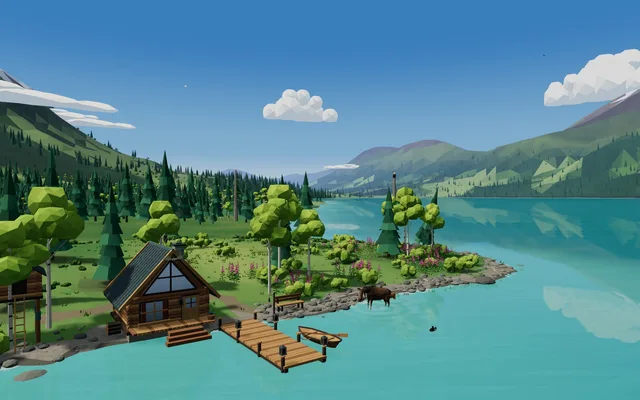
The glacial lake in summer
Jul 15 · 14:05 · Clear
A July afternoon: turquoise water, and a moose wading in the shallows by the cabin.
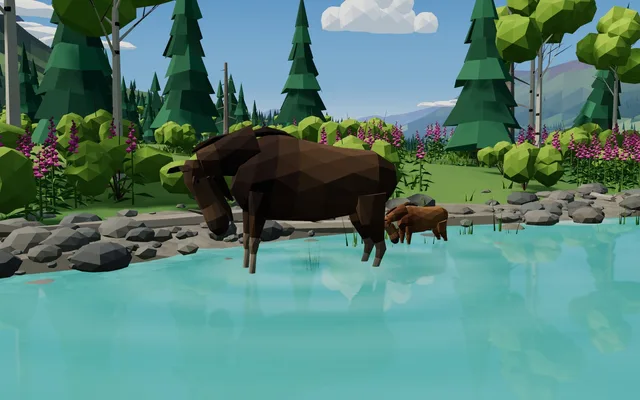
Moose at the water
Jul 15 · 14:05 · Clear · Moose
Up close as a moose and calf wade past banks of pink fireweed.
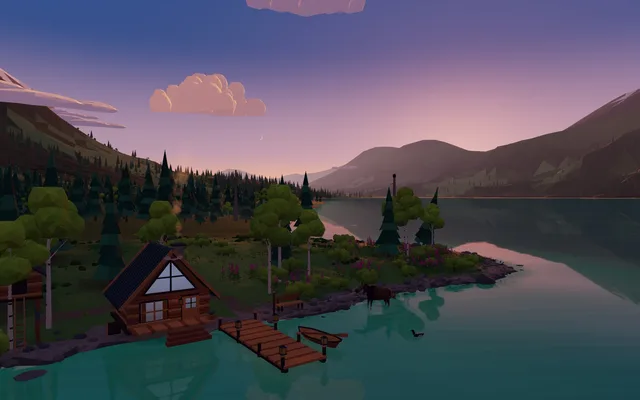
Glow before midnight
Jul 15 · 22:35 · Clear
Half past ten on a summer night and still light, the lake holding a pink-violet sky.
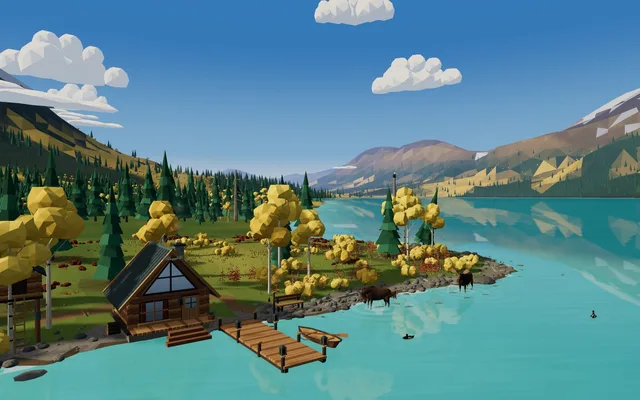
Autumn shore
Sep 18 · 13:55 · Clear
Mid-September: the shoreline trees are fully gold against water that is still turquoise.
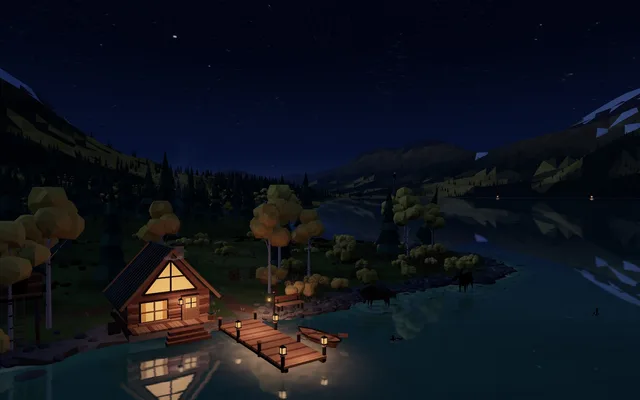
The cabin on an autumn night
Sep 18 · 22:00 · Clear
After dark the cabin and dock lamps come on over a very quiet lake.
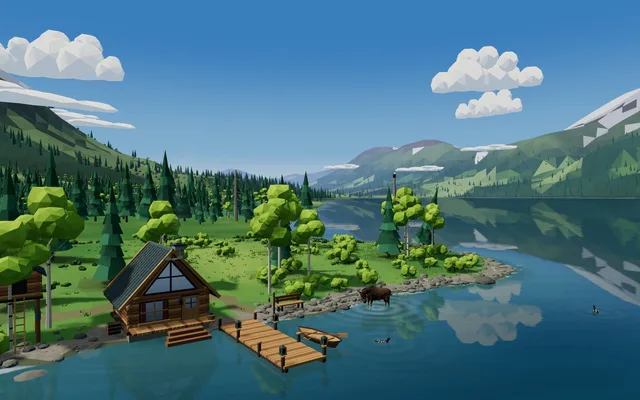
Spring on the lake
May 28 · 13:55 · Clear
Late May, with new leaves just out and snow still on the summits.
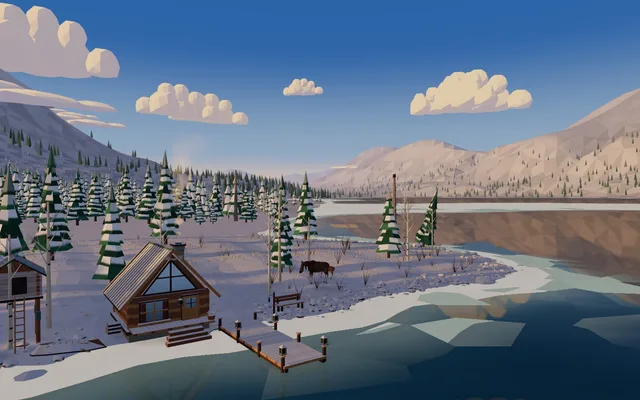
Clear winter day
Jan 18 · 13:10 · Clear
A clear January day: snow along the shore and the far mountains warm in the sun.
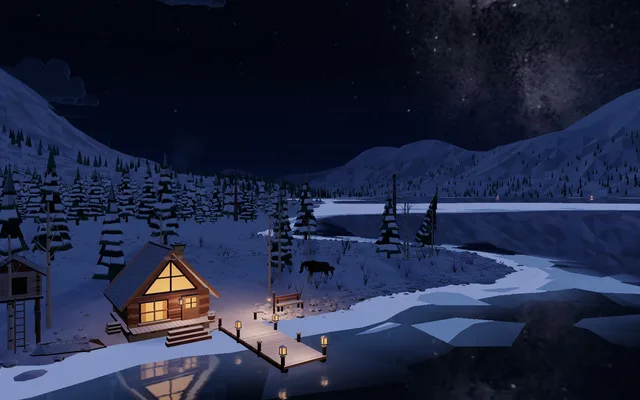
Winter Milky Way
Jan 18 · 22:00 · Clear
A winter night with the cabin lit and the Milky Way across the sky above the lake.
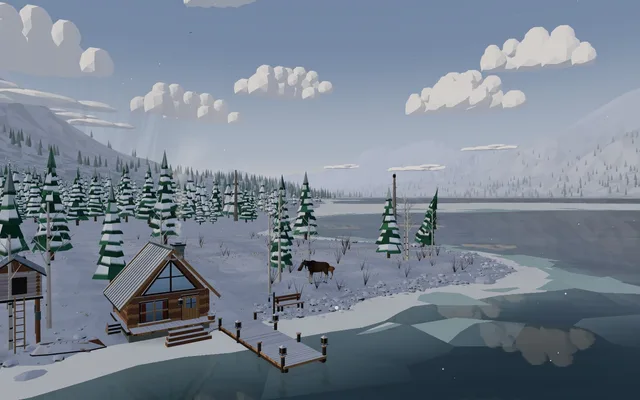
Snow on the shore
Jan 18 · 13:10 · Snow
Snow falls on the cabin and the spruce while the far mountains vanish behind it.
The mountains and shoreline follow real elevation data and maps; the cabin, the dock and the point they stand on are invented, and no such cabin exists at the real spot. The moose and loon calls are the same species recorded elsewhere, and the lake ice and forest wind come from similar landscapes.
In the 3D scene you can change the time, season and weather, or follow the local time.
Enter sceneMore to explore
See all places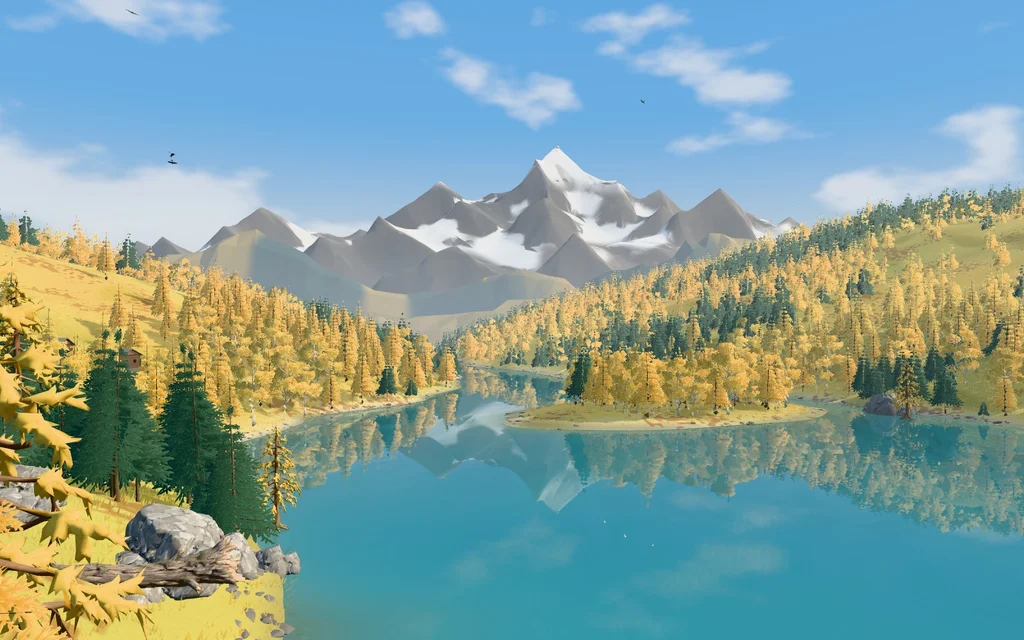
Golden Valley
China · Xinjiang · Kanas
Autumn trees reflected in the lake, a breeze from the mountains.
1,374 mLakeForest breezeBirdsong
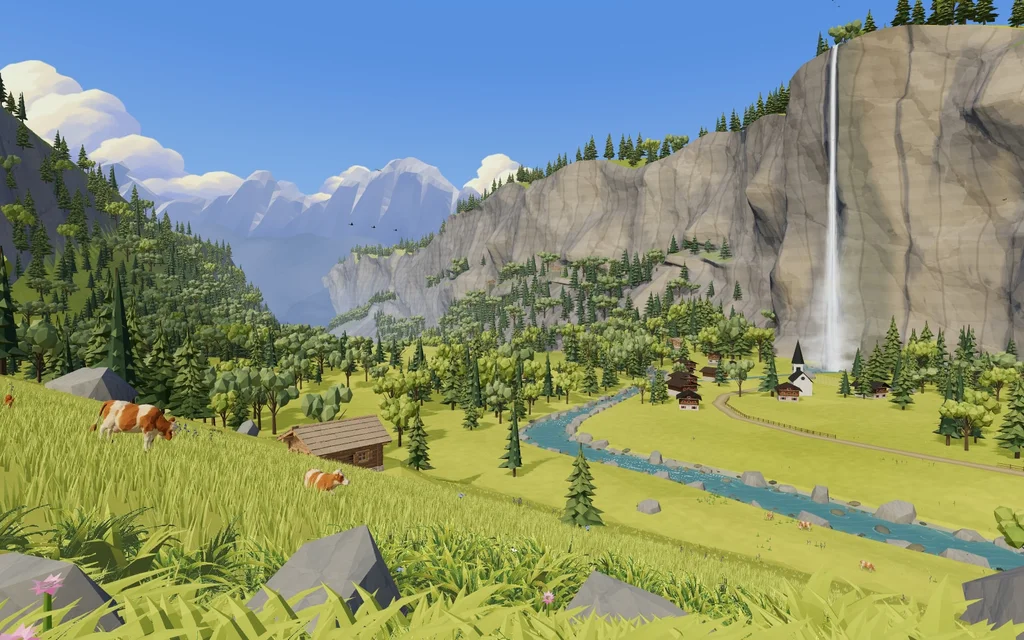
Valley of Waterfalls
Switzerland · Lauterbrunnen
Follow the meadow stream and listen to the waterfalls.
795 mWaterfallStreamCowbells
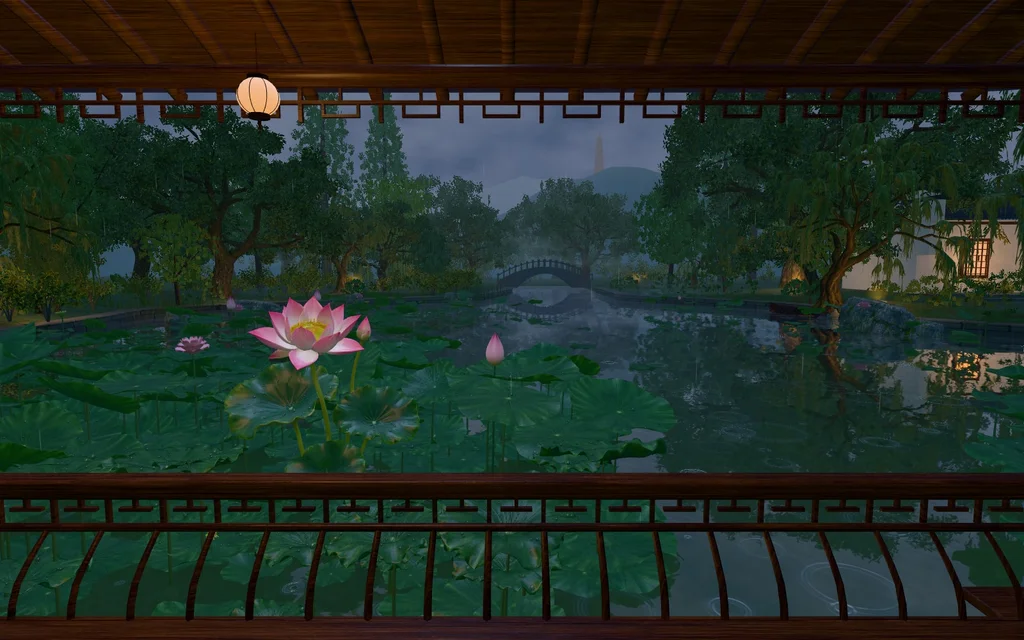
Rain on the Lotus Pond
China · Hangzhou
Listen beneath the pavilion as rain falls on lotus leaves.
7 mRain on leavesEave dripsFrogs